Arabic
  French
  German
  Indonesian
  Italian
  Portuguese-brazilian
  Simplified-chinese
  Spanish
  Thai
Thai  Traditional-chinese
  Turkish
  Vietnamese

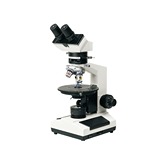
| Name | BMP-107T Trinocular Binocular Polarizing Biological Microscope Digital |
| Code | biobase-0470 |
| Type | Standard |
| Brand | Biobase |
| Category | Optical Instruments |
| subcategory | Microscope |
| Unit | pcs (pcs) |
| In Stock | Yes |
| Berminat hub kami: |  |
Models:
| Model | BMP-107B | BMP-107T | |
Viewing Head | Sliding Binocular Head at 45°, 360° Rotatable | √ | / |
Sliding Trinocular Head at 45°, 360°Rotatable | / | √ | |
Eyepiece | Eyepiece WF10×/ 18 with Scale of Crosshair | √ | √ |
Eyepiece WF10×/ 18 | √ | √ | |
Objective | Strain free Achromatic Objective 4×、10×、40× | √ | √ |
Nosepiece | Toward Quadruple Nosepiece, Center Adjustable | √ | √ |
Analyzer | Rotatable Analyzer with Gradation 0°~90° | √ | √ |
Bertrand Lens | Bertrand Lens, Sliding in/ out of Optical Path | √ | √ |
Optical Compensator | λ Slip(first class red) | √ | √ |
1/ 4λ Slip | √ | √ | |
Quartz wedge | √ | √ | |
Revolving | Diameter Φ160mm, Graduated in1° Increments, Minimum Resolution 6’ when using Vernier Scale | √ | √ |
Condenser | Abbe Condenser with Iris Diaphragm & Filter | √ | √ |
Focusing | Coaxial Coarse & Fine Adjustment, Range 28mm, Fine Division 0.002mm | √ | √ |
Polarizer | Sliding in/ out of Optical Path, Located on the Top of Collector | √ | √ |
Illumination | 6V/ 20W Halogen Lamp, Brightness Adjustable | √ | √ |
Power Supply | AC110/220V±10%, 50/60Hz | √ | √ |
Package Size | 327*273*425mm | √ | √ |
Gross Weight | 7.5kg | √ | √ |
Qualitative polarizing microscopy is very popular in practice, with numerous volumes dedicated to the subject. In contrast, the quantitative aspects of polarized light microscopy, which is primarily employed in crystallography, represent a far more difficult subject that is usually restricted to geologists, mineralogists, and chemists. However, steady advances made over the past few years have enabled biologists to study the birefringent character of many anisotropic sub-cellular assemblies.